- Home
- About Us
-
Residential RoofingRoof Replacement New Roof Installation Re-Roofing Roof Repair Emergency Roof Tarping Storm Damage Roof Repair Leak Detection & RepairRoofing TypesShingle Roofing Metal Roofing Tile Roofing Flat Roofing TPO Roofing Modified Bitumen Roofing Low-Slope RoofingCommercial RoofingCommercial Roof Replacement Commercial Roof Repair Commercial Roof Maintenance Commercial Flat Roofing Commercial Leak Repair Roof CoatingsStorm & InsuranceStorm Damage Inspection Hail Damage Roof Repair Wind Damage Roof Repair Hurricane Roof Services Insurance Claim AssistanceInspections & MaintenanceRoof Inspections Roof Certifications Real Estate Roof Inspections Residential Maintenance Commercial MaintenanceExterior ComponentsWindows and Doors Gutters, Soffit, Fascia & Flashing Storm Protection - Shutters📍 Service AreasFort Myers Cape Coral Naples Bonita Springs Estero North Fort Myers Golden Gate Sanibel Island Captiva Island Buckingham Alva Lehigh Acres Fort Myers Beach Bonita Beach Boca Grande Sarasota
- Book a Consult
- Blog
- FAQ
- ⚡ Instant Estimator
- Contact
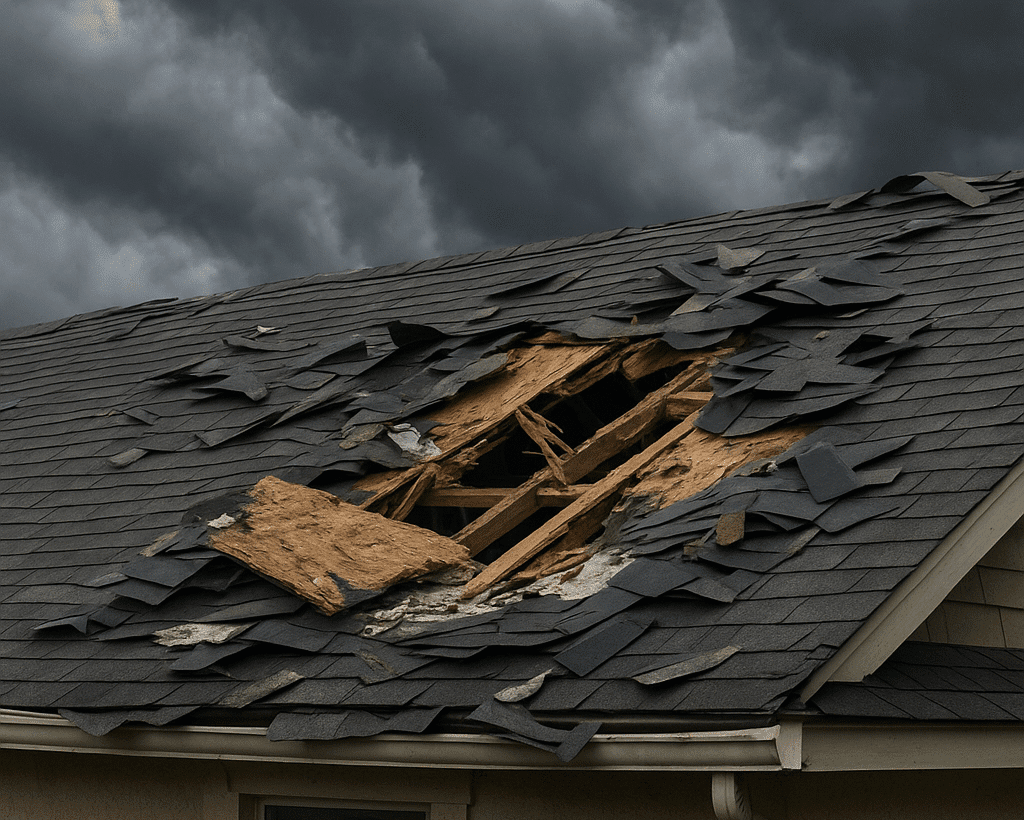
Roof Damaged? We Tarp Same Day.
A damaged roof exposes your home to water, mold, and structural destruction — every hour you wait makes it worse. Sage Roofing responds same day across Cape Coral, Fort Myers, and all of Southwest Florida. We stop the leak, secure your roof, and document everything for your insurance claim.
Emergency Tarping Isn't Optional — It's Required
Most homeowner's insurance policies include a "duty to mitigate" clause — meaning you're legally obligated to take reasonable steps to prevent further damage after a storm. A properly installed tarp is step one. Skipping it can give your insurer grounds to deny or reduce your claim.
Every hour without a tarp is another hour of water infiltrating your decking, insulation, drywall, and framing. In Florida's rain patterns, a single afternoon storm through an untarped roof can cause tens of thousands of dollars in additional interior damage.
Mold can begin growing in wet building materials within 24 to 48 hours in Southwest Florida's humidity. Once mold takes hold in your attic or walls, remediation costs dwarf the cost of a simple emergency tarp. Fast action is the only prevention.
Your homeowner's insurance policy requires you to take reasonable action to prevent further loss after a covered event. Documented tarping proves you fulfilled this obligation — making it far harder for your insurer to reduce or deny your claim based on "failure to mitigate."
Prolonged water exposure rots roof decking, weakens rafters, and compromises the structural integrity of your home. What starts as a few missing shingles can become a partial roof collapse if water damage is left unchecked in Florida's year-round humidity.
An open or severely damaged roof is a safety hazard — exposed electrical, falling debris, and compromised structural members all pose real risks to the people inside your home. Emergency tarping makes the structure safe to occupy while permanent repairs are arranged.
After a major storm, roofing contractors are in extremely high demand. A properly installed tarp can protect your home for 60–90 days, giving you time to get the right contractor, pull permits, and complete a quality permanent repair — not a rushed patch job.
What Happens to Your Home Every Hour Without a Tarp
Storm damage doesn't stop when the rain stops. Water continues infiltrating, spreading, and destroying long after the clouds clear. Here's the real-time damage timeline of an untarped roof in Southwest Florida.
Water enters through the breach immediately. Insulation becomes saturated, drywall absorbs moisture, and water begins tracking along structural members far from the visible damage point.
Wood decking begins to swell and warp. Drywall ceilings sag, crack, and may collapse. Paint blisters. Flooring starts to cup or buckle if water has reached lower levels of the home.
In Florida's heat and humidity, mold spores begin colonizing wet surfaces within 24–48 hours. Once established, mold remediation costs can exceed $5,000–$20,000+ depending on spread — and your insurer may dispute coverage if you failed to tarp.
Rafters, trusses, and structural lumber begin to rot and lose load-bearing capacity. What started as a $3,000–$8,000 roofing repair can become a $25,000+ structural remediation project within a single week.
Your Insurance & Emergency Tarping
What you need to know before your adjuster visits
How We Tarp — The Right Way
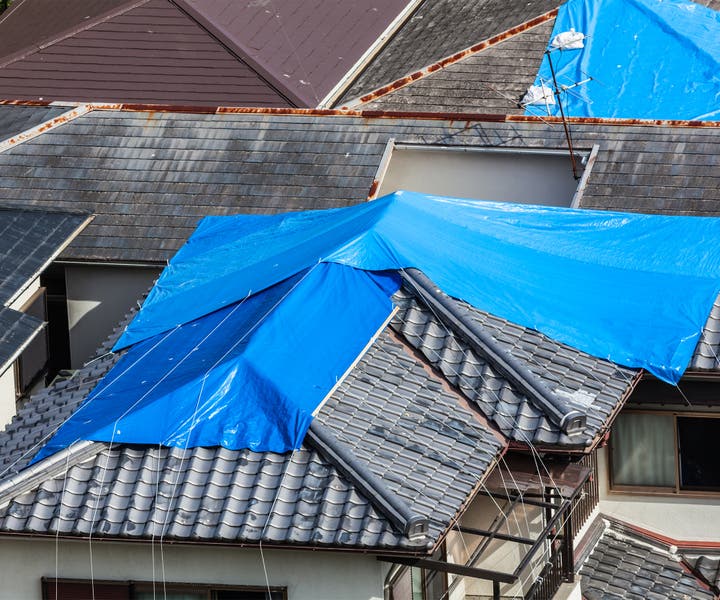
There's a big difference between a properly installed emergency tarp and a tarp thrown over a roof. Ours are installed to withstand Florida's wind and rain until permanent repairs are complete.
We arrive on-site same day, assess the full extent of damage including areas not visible from ground level, and photograph everything before touching the roof. This documentation is critical for your insurance claim.
We use commercial-grade, UV-resistant, polyethylene tarps — not hardware store blue tarps. These are rated to withstand Florida's intense UV and wind loads for 60–90+ days, providing real weather protection while you arrange permanent repairs.
Tarps are secured with wood battens, screws, and perimeter fasteners at the ridge and eaves — not just weighted with sandbags. Edges are overlapped and sealed to prevent wind from getting underneath and lifting the tarp in the next storm.
Before we leave, you receive a full written estimate for permanent repairs plus a complete damage documentation package — photos, measurements, and assessment notes ready for your insurance adjuster. We can also meet the adjuster on your behalf.
Not All Tarping Is Equal — Here's What to Ask Any Contractor
Ask what gauge/mil tarp they use (we use 10–12 mil minimum), how they secure edges (battens and fasteners, not just sandbags), whether they photograph damage before tarping (we do — always), and whether they're FL-licensed and insured (License #CCC1337188). If a contractor can't answer these questions clearly, don't let them on your roof.
Emergency Tarping Across Southwest Florida
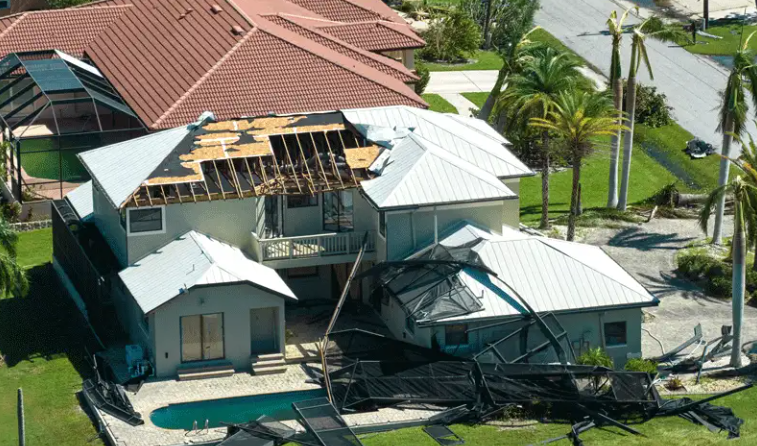
Real emergency responses across Cape Coral, Fort Myers, Naples, and surrounding communities — storm after storm.
When Your Roof Fails, You Need a Contractor You Can Trust
After every major storm in Southwest Florida, unlicensed contractors and out-of-state storm chasers flood the area offering quick fixes. Some tarp incorrectly, some inflate damage claims, and many disappear when problems arise. Sage Roofing is local, licensed, and here long after the storm passes.
After the Tarp — What's Next
Emergency tarping is step one. Here's the full path to a permanent fix:
Emergency Tarping Questions Answered
Common questions from Southwest Florida homeowners dealing with urgent roof damage.
Emergency Tarping Across Southwest Florida
We respond to emergency tarping calls throughout Lee and Collier County — same day.
Every Hour Costs You More. Call Right Now.
Water damage, mold, and a weakened insurance claim are all waiting on the other side of inaction. Sage Roofing responds same day — call now and we'll have a tarp on your roof before the next storm hits.
FL License #CCC1337188 · Same-Day Response · Lee & Collier County · Insurance Documentation Included